Overview
Credentials here are not presented as proof of completion. They are presented as evidence of what was brought into the practice and why.
The learning across these two domains was deliberate and sequential: first, the architectural and ethical properties that determine whether AI systems are governable and trustworthy; then, the mathematical and statistical foundations needed to evaluate whether they are actually performing what they claim to perform. Both tracks address the same structural concern from different directions — what allows a complex system to remain legible, auditable, and coherent under real conditions.
AI Engineering and Governance
Governing AI systems requires more than deploying them. It requires understanding the properties that determine whether a system is bounded, auditable, and operationally trustworthy. This group of credentials covers the architecture of prompt systems, the ethical and safety constraints that shape responsible deployment, and the applied use of generative AI tooling at a technical level. The underlying question across all nine is consistent with the rest of this practice: what determines whether a system remains coherent and controllable as it operates?
- Prompt Engineering Specialisation — Vanderbilt University, Dec 2025
- Trustworthy Generative AI — Vanderbilt University, Dec 2025
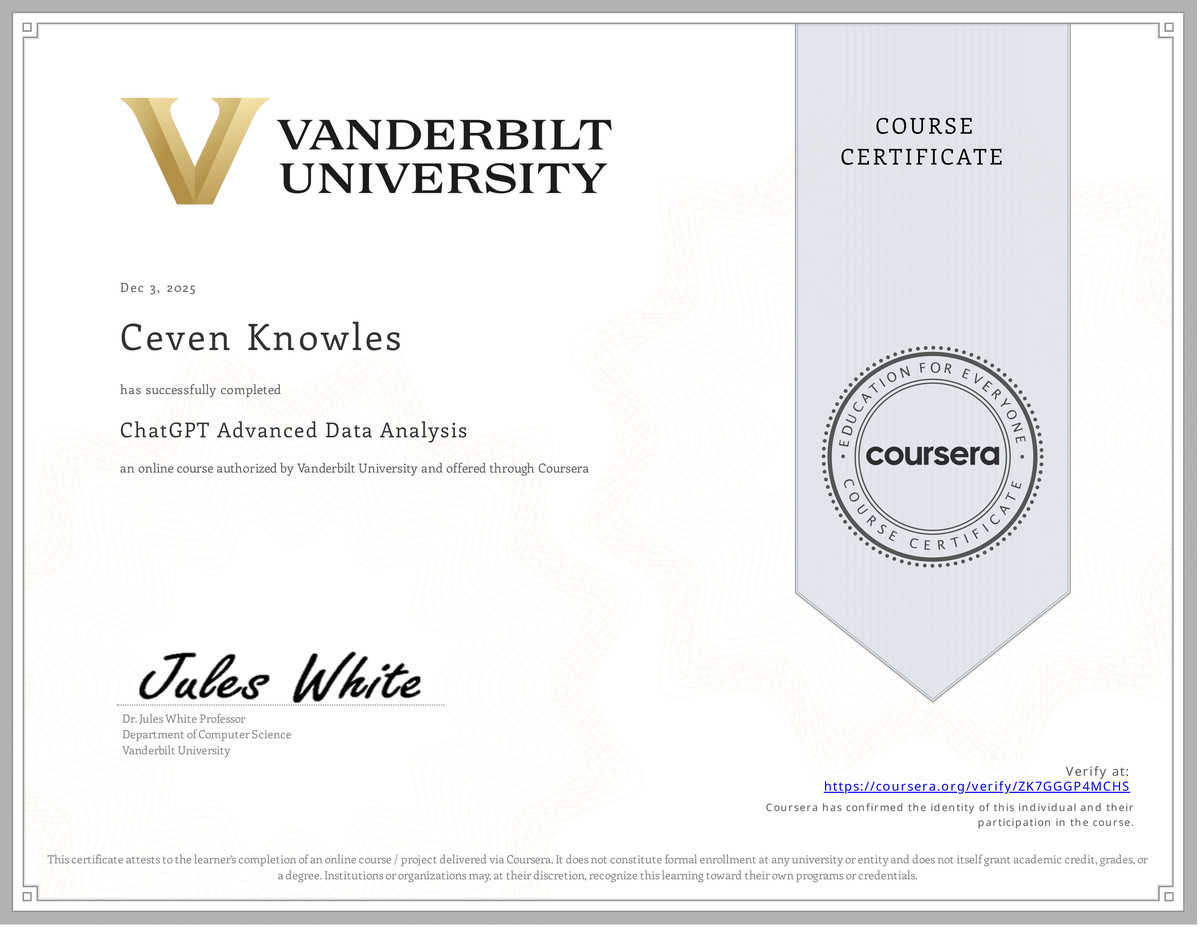
- ChatGPT Advanced Data Analysis — Vanderbilt University, Dec 2025
- Prompt Engineering for ChatGPT — Vanderbilt University, Nov 2025
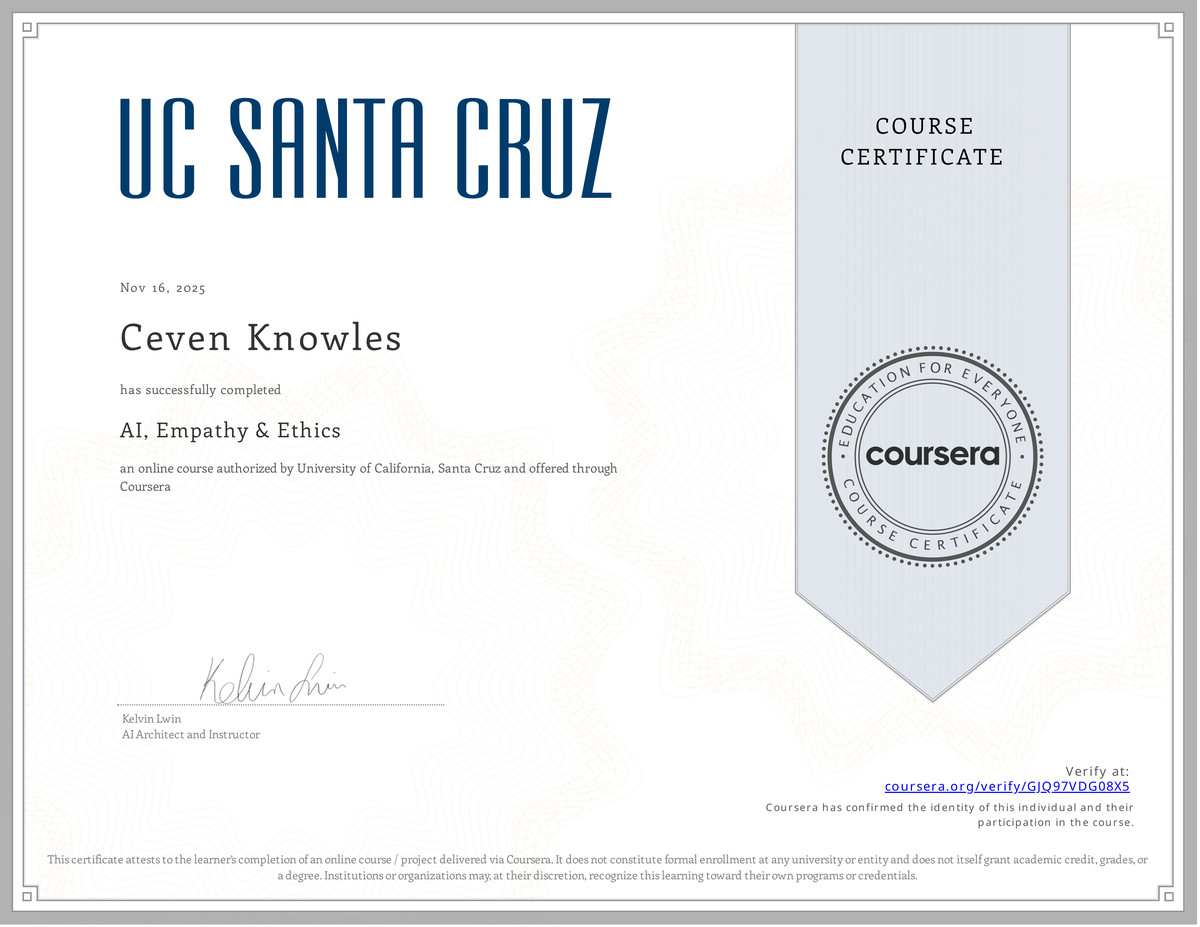
- AI, Empathy and Ethics — UC Santa Cruz, Nov 2025
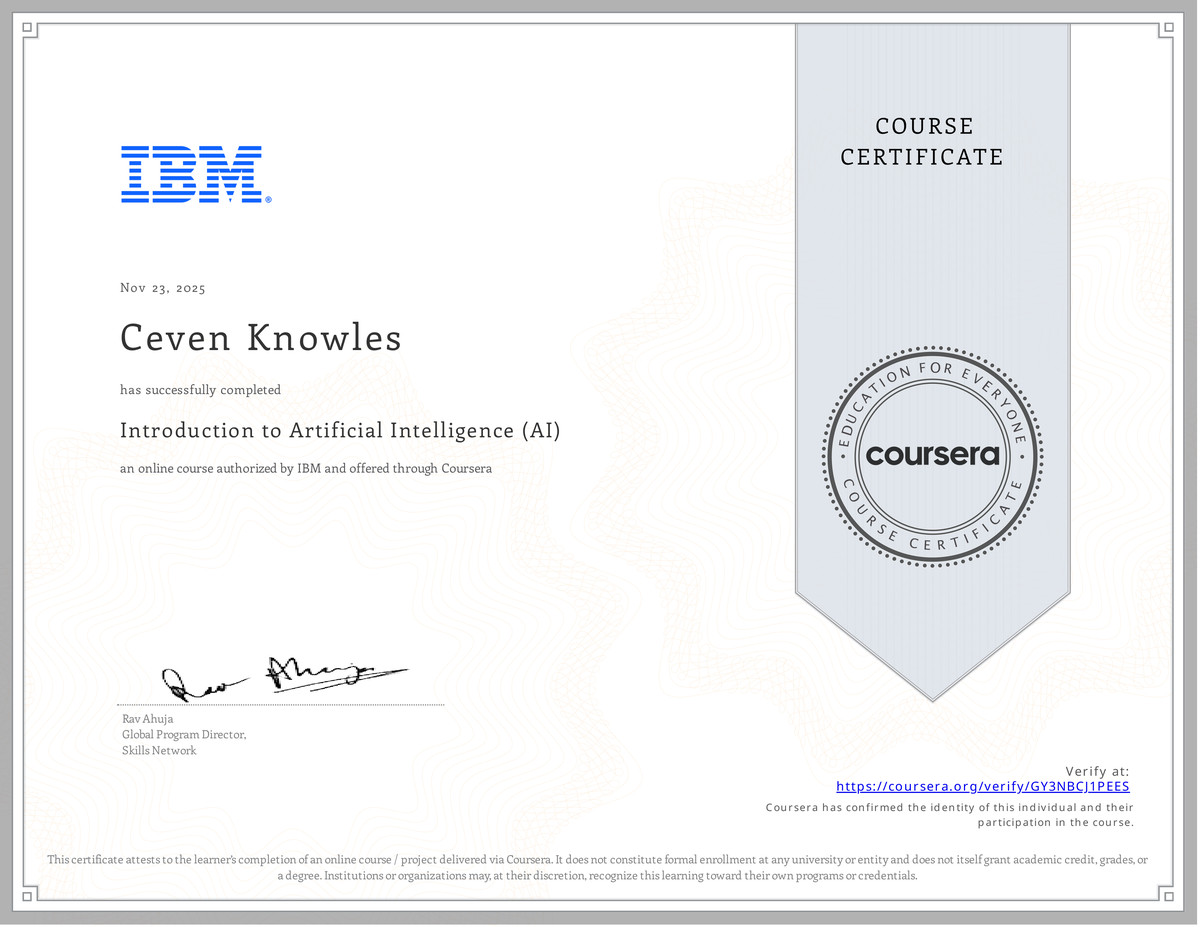
- Introduction to Artificial Intelligence — IBM, Nov 2025
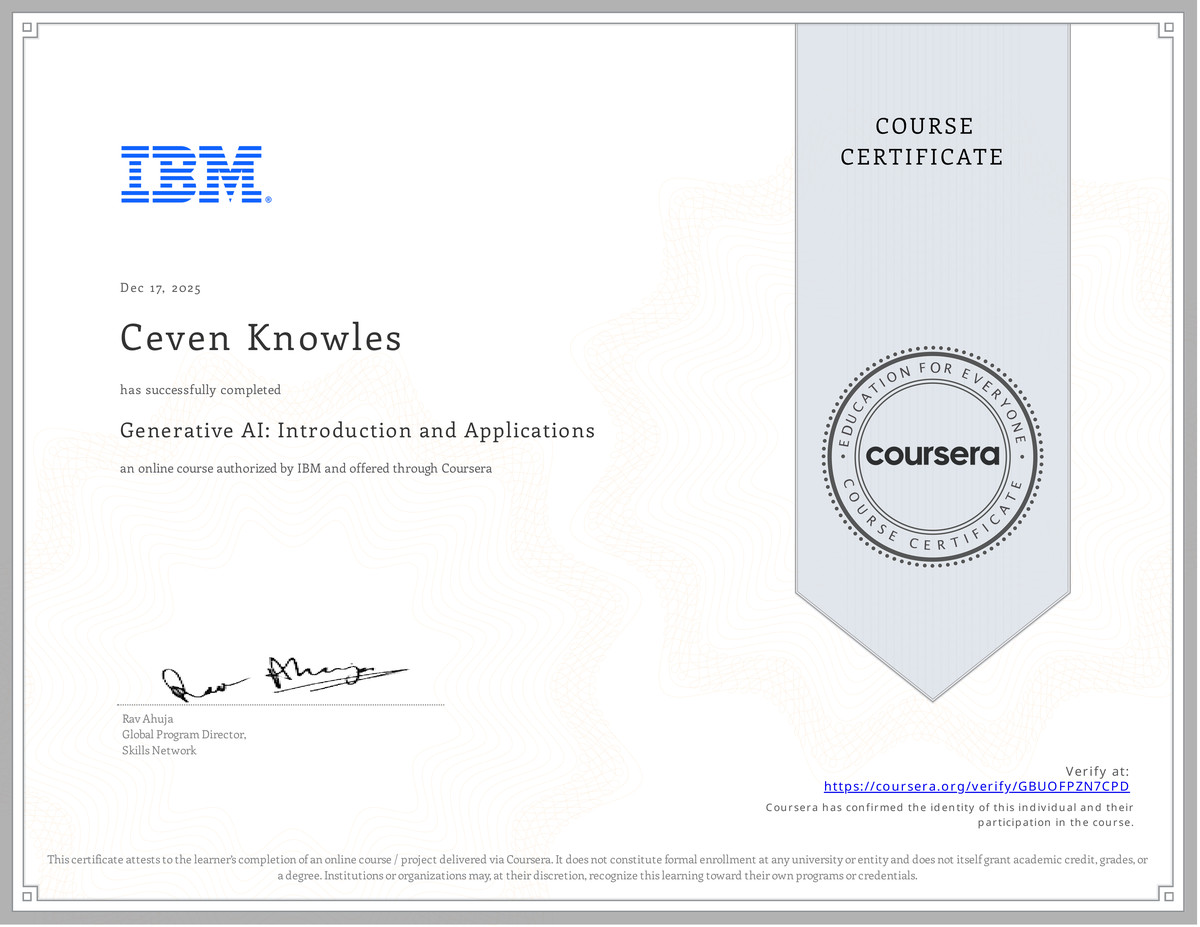
- Generative AI: Introduction and Applications — IBM, Dec 2025
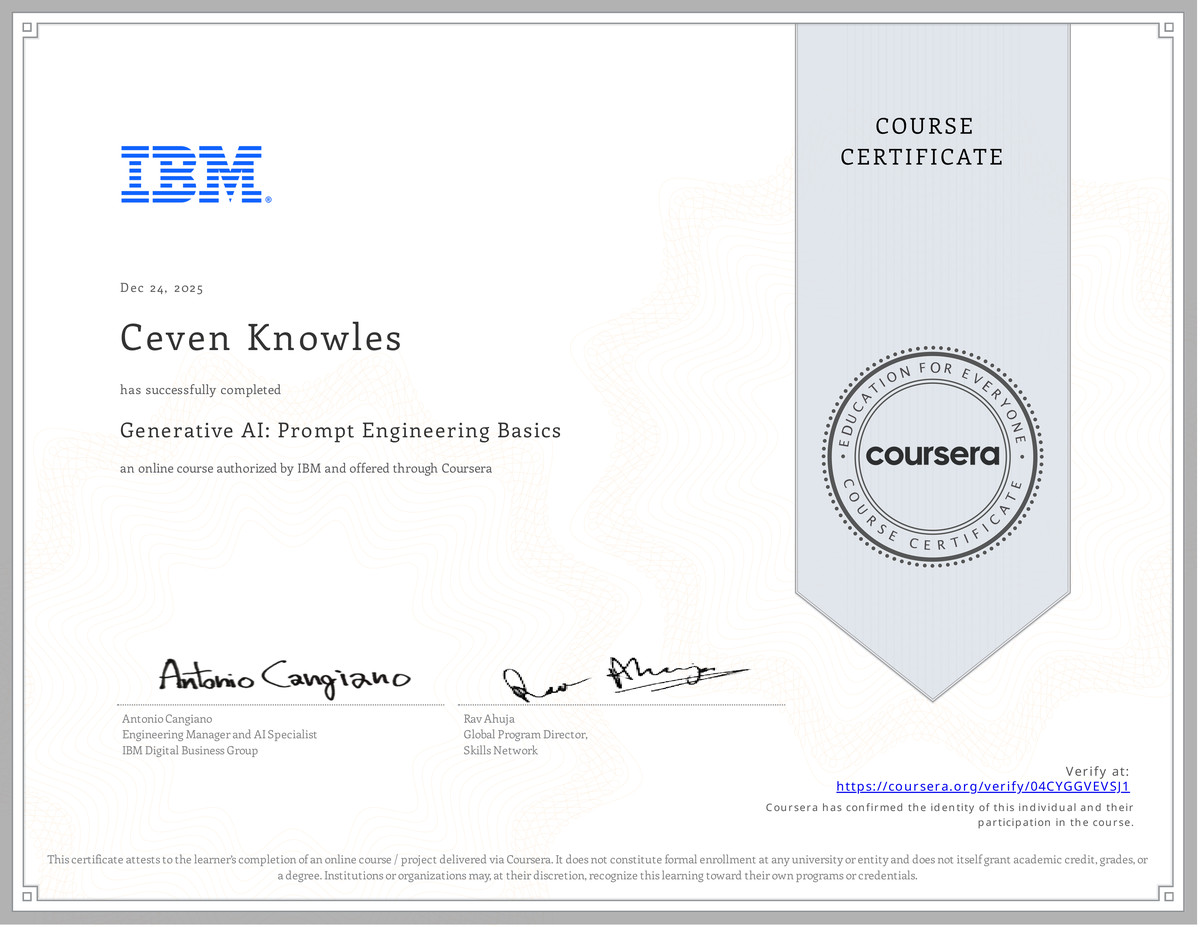
- Generative AI: Prompt Engineering Basics — IBM, Dec 2025
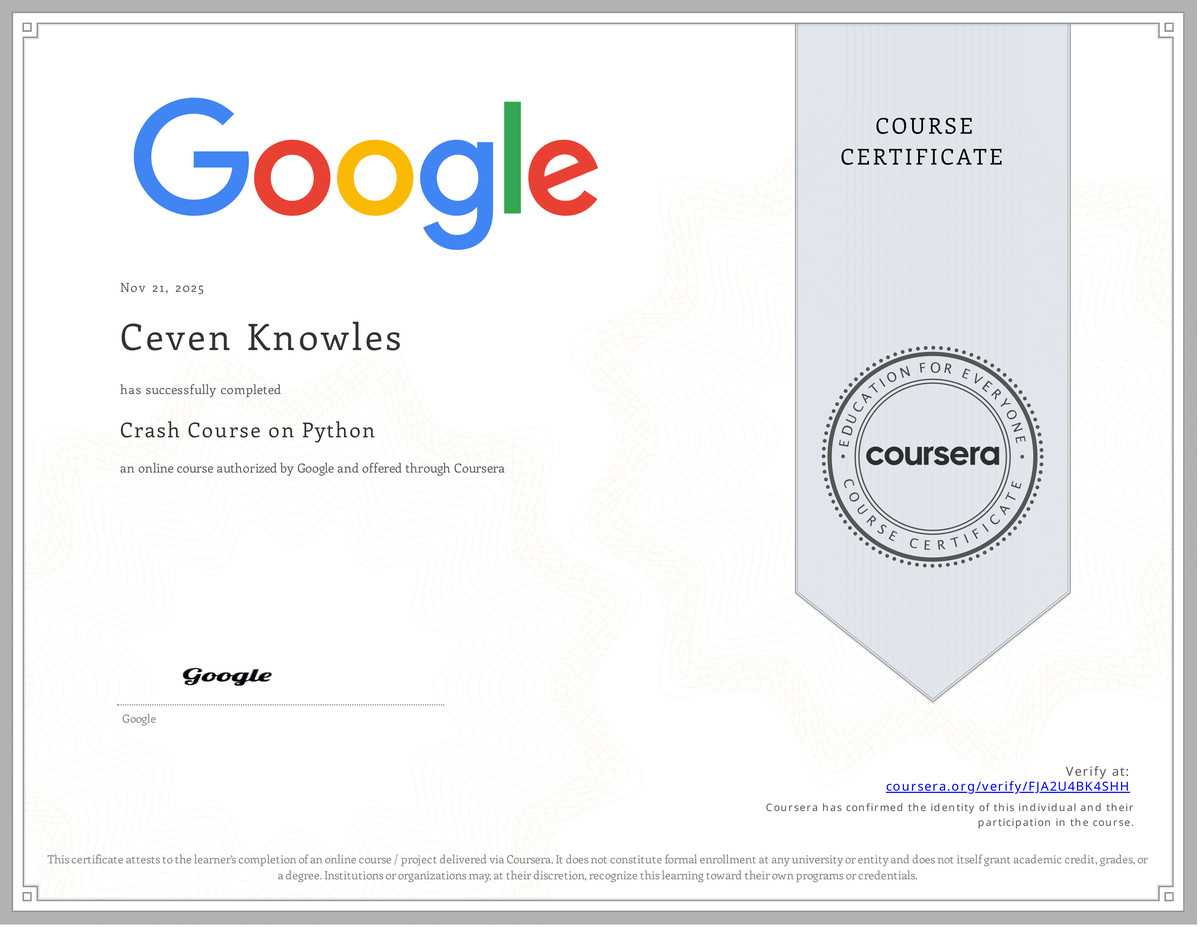
- Crash Course on Python — Google, Nov 2025



Statistical and Mathematical Foundations
A system cannot be governed without being evaluated, and evaluation requires the ability to reason about probability, variance, and model behaviour under real conditions. This group of credentials builds the mathematical literacy needed to assess whether a machine learning system is performing what it claims to perform — not as a data scientist, but as someone responsible for the structural integrity of the system. Across the Wolfram Language professional certificates and the LinkedIn Machine Learning Foundations series, the focus was on reproducible statistical analysis, the linear algebra and calculus that underpin model training, and the evaluative rigour that any serious audit of system behaviour requires.
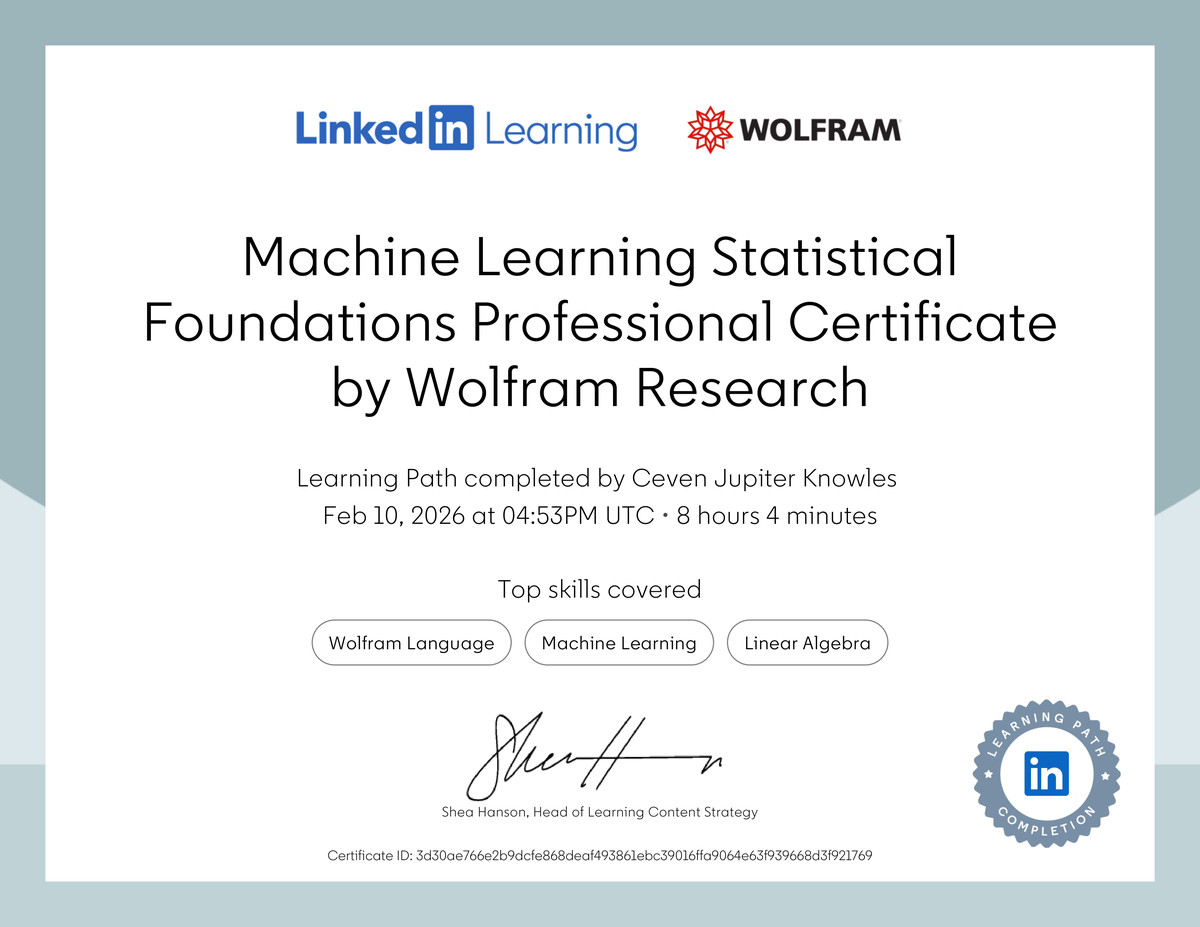
- ML Statistical Foundations Professional Certificate — Wolfram Research, Feb 2026
- Statistics Foundations Professional Certificate — Wolfram Research, Jan 2026
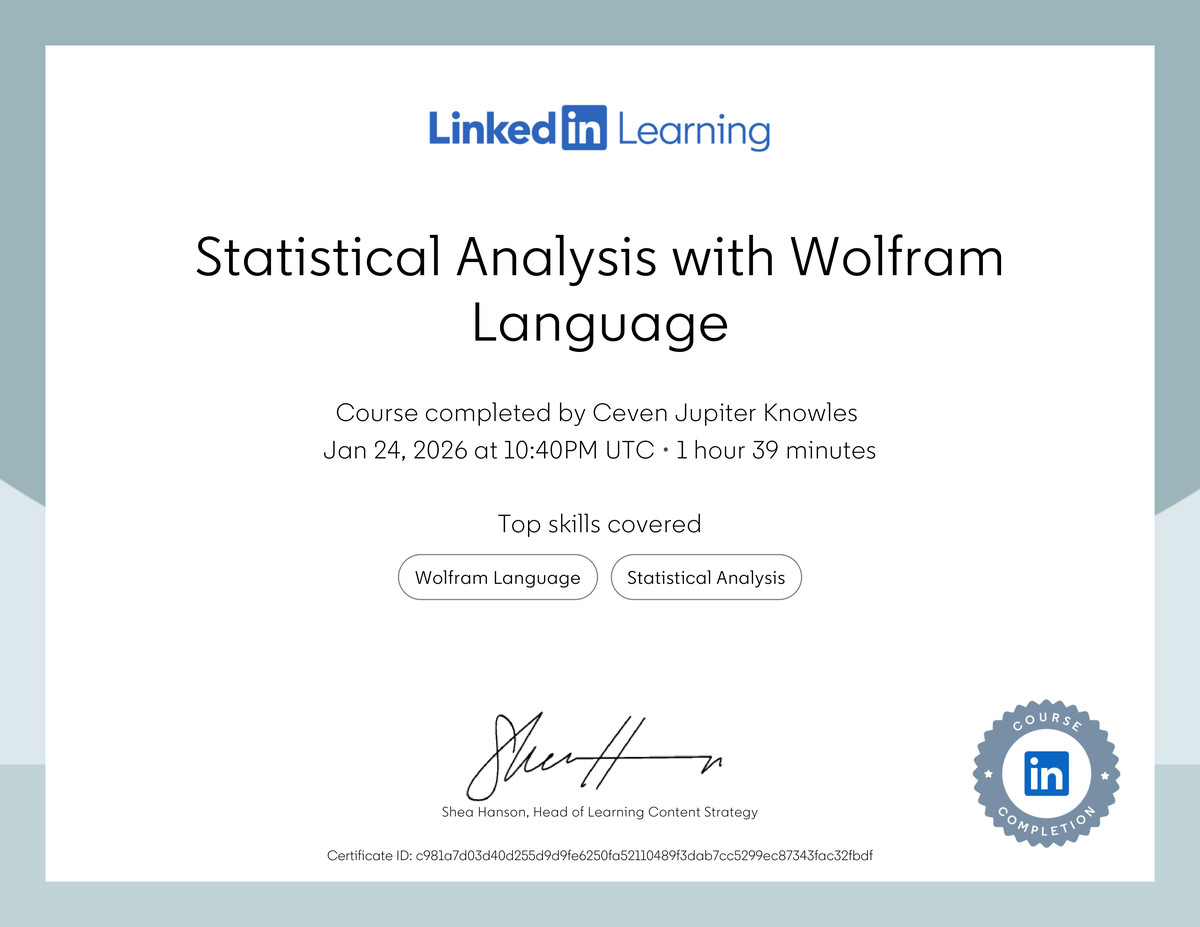
- Statistical Analysis with Wolfram Language — Wolfram Research, Jan 2026
- Built-in Machine Learning in Wolfram Language — Wolfram Research, Feb 2026
- Machine Learning Foundations: Linear Algebra — LinkedIn Learning, Feb 2026
- Machine Learning Foundations: Calculus — LinkedIn Learning, Feb 2026
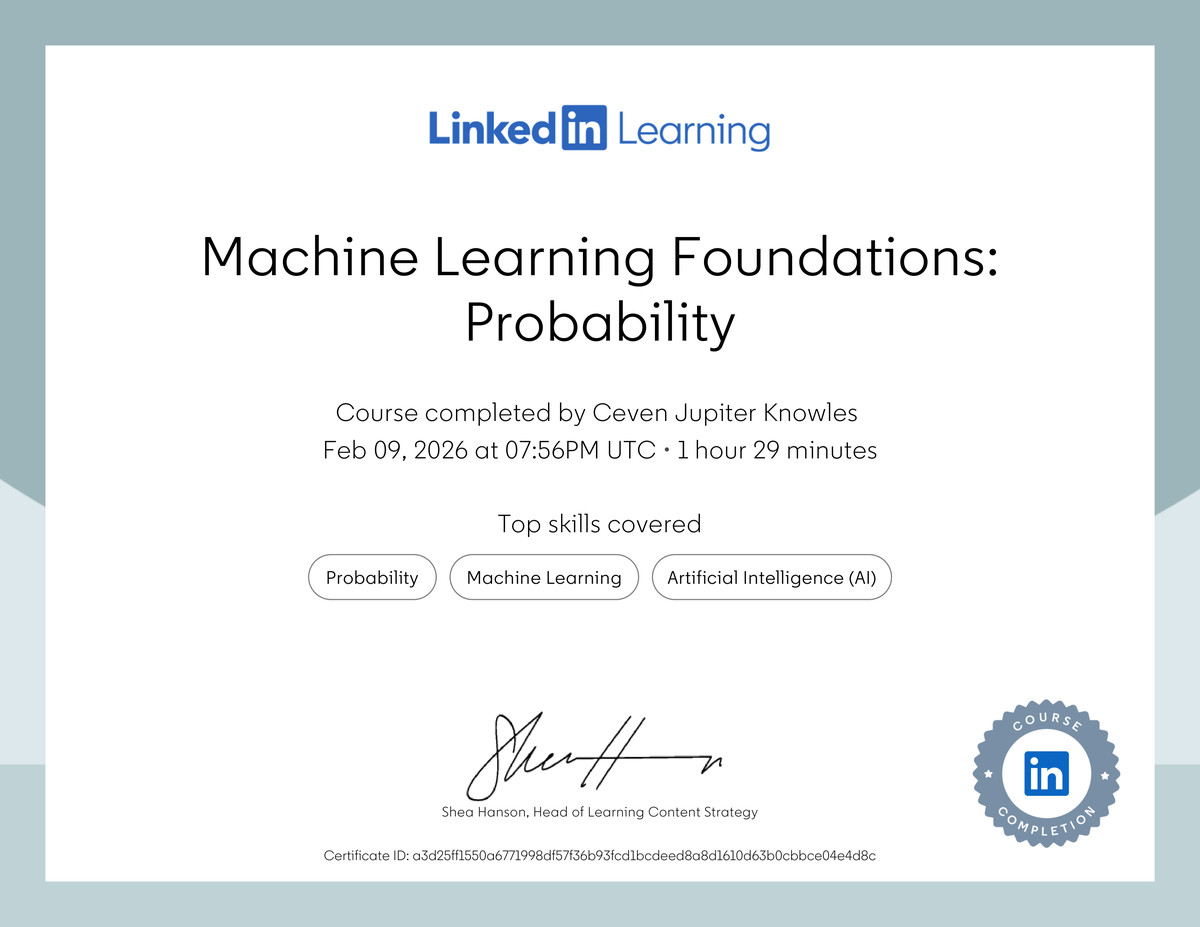
- Machine Learning Foundations: Probability — LinkedIn Learning, Feb 2026
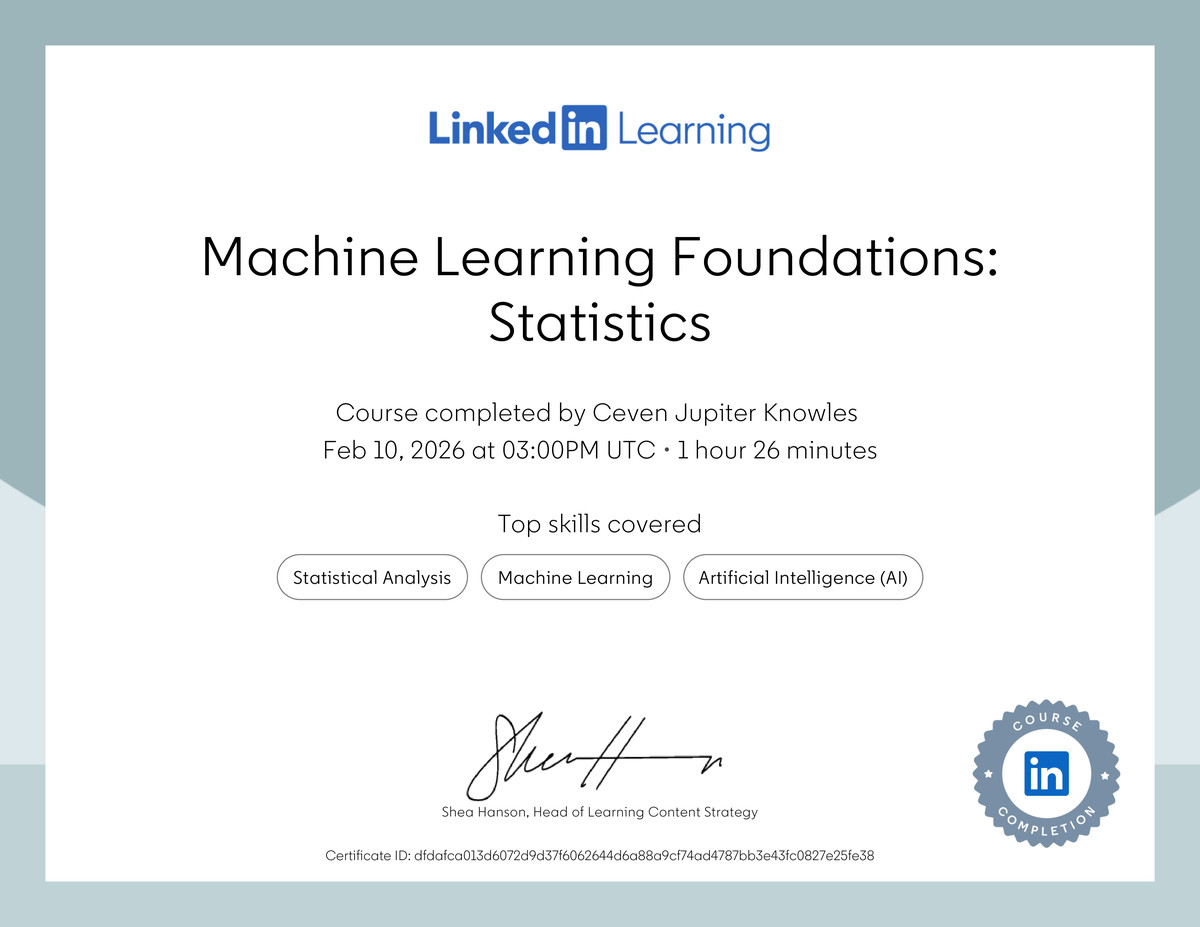
- Machine Learning Foundations: Statistics — LinkedIn Learning, Feb 2026
- Statistics Foundations 1: The Basics — LinkedIn Learning, Jan 2026
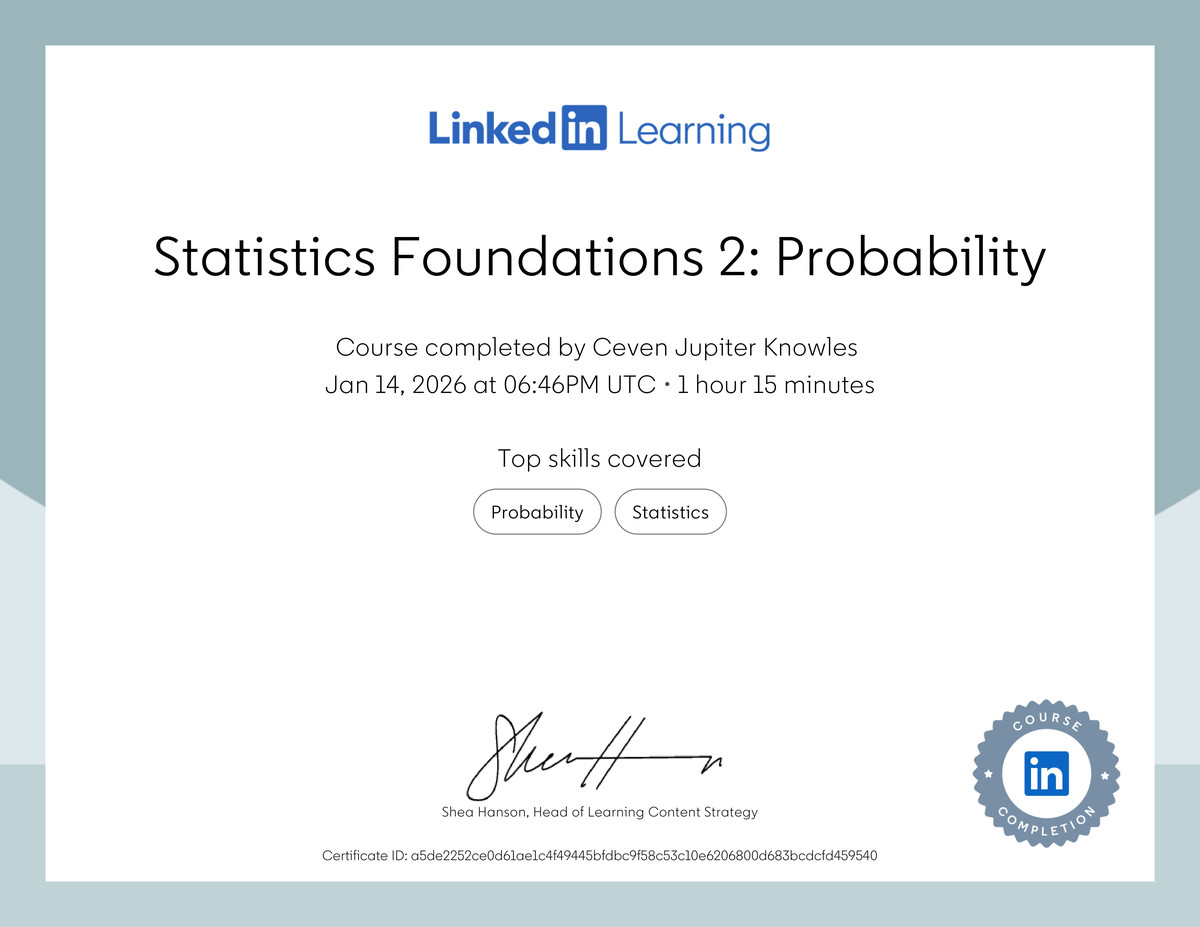
- Statistics Foundations 2: Probability — LinkedIn Learning, Jan 2026
- Statistics Foundations 3: Using Data Sets — LinkedIn Learning, Jan 2026
- Statistics Foundations 4: Advanced Topics — LinkedIn Learning, Jan 2026
- NumPy Essential Training: Foundations of NumPy — LinkedIn Learning, Feb 2026
- Excel Statistics Essential Training 1 — LinkedIn Learning, Jan 2026
- Excel Statistics Essential Training 2 — LinkedIn Learning, Jan 2026
- Artificial Intelligence Foundations: Machine Learning — LinkedIn Learning, Feb 2026